

Walk down the cooking oil aisle at any grocery store, and you’ll find plenty of options. Canola, sunflower, olive, corn, and soybean oils each have different nutritional profiles and cooking properties. With so many choices available, selecting the right oil for your kitchen can take some consideration.
Vegetable oil remains a popular household choice, thanks to its neutral flavour and suitability for different recipes. But what makes it a common choice for everyday cooking? How does its nutritional value compare with other oils, and what should you know before adding it to your grocery list?
In this blog, we’ll examine vegetable oil’s nutritional value, calorie content, smoke point, and cooking uses. We’ll also discuss what to look for when buying cooking oil and why Taza Foods Soybean Vegetable Oil deserves a place on your shopping list.

What Is Vegetable Oil Made Of?
Vegetable oil is made from plant-based sources, including seeds, nuts and fruits. It can come from a single plant source or a blend of different oils. Each variety has its own flavour, fatty acid composition and cooking properties.
Soybean oil is one of the most widely used types of vegetable oil. It is extracted from soybeans and has a mild flavour that works well in everyday cooking. It contains a mix of polyunsaturated, monounsaturated and saturated fats, with most of its fat content coming from unsaturated fatty acids, including omega-6 and omega-3.
You can use soybean vegetable oil in a variety of dishes, including:
- Sautéing vegetables, meat and other ingredients.
- Preparing curries, sauces and gravies.
- Baking cakes, pastries and other baked goods.
- Roasting vegetables and other ingredients.
- Cooking rice dishes and everyday meals.
- Frying, depending on the oil’s refinement and recommended cooking temperature.
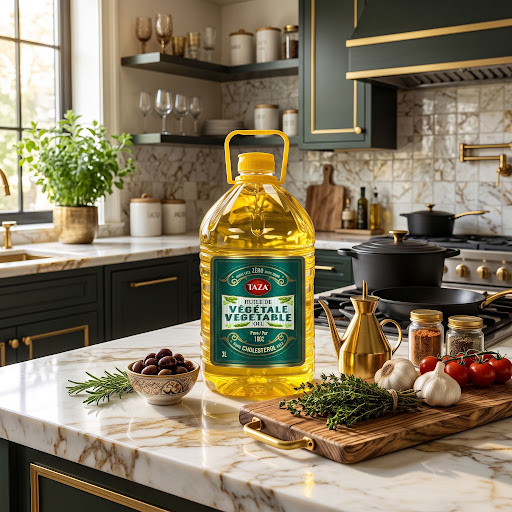
At TAZA Foods, our vegetable oil is made from soybeans and offers a versatile cooking option for your everyday meals. Its mild flavour makes it suitable for preparing a variety of recipes, from homemade curries and gravies to baked dishes and fried favourites.
What Is the Smoke Point of Soybean Vegetable Oil?
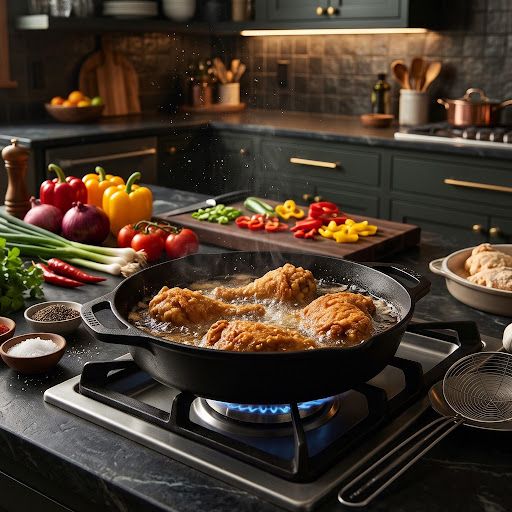
The smoke point is the temperature at which an oil starts producing visible smoke. When oil reaches this point, it begins to break down, which can affect its flavour and quality.
This matters because different cooking methods expose oil to different temperatures. Sautéing vegetables, for example, does not require the same heat as deep frying.
Refined soybean oil generally has a relatively high smoke point, but the exact temperature varies with refining and processing. You should not assume that every soybean oil has the same heat tolerance.
Before using TAZA Vegetable Oil for high-temperature cooking, check its product packaging or contact the manufacturer for its recommended cooking temperature.
You can also protect oil quality by following a few simple practices:
- Heat oil gradually and avoid overheating it.
- Do not leave heating oil unattended.
- Avoid reusing oil that has become dark, thick or developed an unusual smell.
- Store oil in a cool, dark place with the bottle tightly closed.
How Many Calories Does Vegetable Oil Have?
Cooking oil is calorie-dense because it consists almost entirely of fat. A tablespoon of soybean oil provides approximately 120 calories, while a teaspoon provides around 40 calories.
| Serving size | Approximate calories |
| 1 teaspoon (5 ml) | 40 |
| 1 tablespoon (15 ml) | 120 |
| 2 tablespoons (30 ml) | 240 |
These are general estimates based on standard nutrition data for cooking oil. Check the Nutrition Facts table on the bottle for exact serving information.
If you monitor your calorie intake, measuring the oil you use can help you keep track of your portions (particularly when preparing recipes that call for several tablespoons).
What Are the Nutritional Qualities of Soybean Oil?
Here are some of the main nutritional characteristics of soybean oil.
1. Contains Unsaturated Fats
Soybean oil contains polyunsaturated and monounsaturated fats. Health Canada recommends choosing foods with mostly unsaturated fats in place of foods high in saturated fat.
This recommendation includes using oils such as soybean, canola, sunflower and olive oil when preparing meals.
You can read more in Health Canada’s guide to choosing foods with healthy fats.
2. Provides Essential Fatty Acids
Soybean oil contains omega-6 and omega-3 fatty acids. These are essential fatty acids, which means your body needs to obtain them through food.
They support normal body functions and form part of a balanced diet. Soybean oil can contribute to your intake, alongside other sources such as nuts, seeds and fish.
3. Naturally Contains No Dietary Cholesterol
Soybean oil comes from a plant source. Plant-based oils do not naturally contain dietary cholesterol, unlike animal-based foods such as meat and dairy products.
4. Is Calorie-Dense
Although soybean oil contains mostly unsaturated fats, it still provides around 120 calories per tablespoon. The amount you use matters, so consider portion size as part of your overall eating habits.
For more information about different types of dietary fat, read Health Canada’s guide to fats and their effects on health.
Soybean Oil vs Other Vegetable Oils: What Is the Difference?
Not all cooking oils have the same nutritional composition or flavour. Comparing their main characteristics can help you choose an option that suits your cooking habits.
| Cooking oil | Main source | Key characteristics |
| Soybean oil | Soybeans | Contains mostly unsaturated fats, including omega-6 and omega-3 fatty acids |
| Canola oil | Rapeseed | Generally low in saturated fat and contains monounsaturated and polyunsaturated fats |
| Sunflower oil | Sunflower seeds | Contains mostly unsaturated fats; composition varies by variety |
| Corn oil | Corn germ | Contains mostly unsaturated fats, including polyunsaturated fats |
| Olive oil | Olives | Rich in monounsaturated fats; flavour varies by type |
How to Choose the Best Vegetable Oil for Your Kitchen
When comparing cooking oils, consider more than the price or bottle size. These five factors can help you make a practical choice.
1. Check the Oil Source
Read the ingredient list to identify the type of oil inside the bottle. Some products contain oil from a single source, while others use a blend.
If you prefer soybean, canola or sunflower oil, look for a product that clearly identifies its ingredients. The Canadian Food Inspection Agency’s labelling guidance explains the requirements for naming single-source and multi-source vegetable oils in Canada.
2. Compare the Nutrition Facts
Check the calories, total fat and saturated fat per serving. Use the same serving size when comparing different products so you can assess them fairly.
The Nutrition Facts table also helps you understand how much oil you are using in relation to your daily diet.
3. Match the Oil to Your Cooking Method
Think about how you prepare meals. Sautéing, baking and deep frying have different temperature requirements.
Check the manufacturer’s recommendations before using an oil for high-temperature cooking.
4. Consider Flavour
Some oils have a distinctive taste, while others have a mild flavour. Choose one that complements the ingredients in your regular recipes.
A mild-flavoured oil can be useful when you want your spices, herbs and other ingredients to stand out.
5. Compare Bottle Size and Value
Consider how frequently you cook and how much oil your household uses. A larger bottle may offer convenience for regular cooking, provided you can store it properly and use it while it remains fresh.
Why Choose TAZA Vegetable Oil?
At TAZA Foods, our vegetable oil is made from soybeans and comes in a 3 L bottle. Its product description highlights a taste that lets the flavour of your meals come through.
Here are the key product details:
- Soybean-based: Made from soybeans.
- 3 L bottle: A practical size for regular household cooking.
- Versatile: Suitable for a range of everyday recipes, subject to the recommended cooking temperature.
Whether you are preparing curries, rice dishes or everyday meals, TAZA Vegetable Oil gives you a soybean-based option for your kitchen.
Where to Buy TAZA Vegetable Oil in Canada
Ready to purchase TAZA Vegetable Oil for your kitchen? You can order directly through the TAZA Products online store. Simply visit the product page, check delivery availability for your location, and place your order.
Order TAZA Vegetable Oil online.
You can also view the product details before making your purchase.
FAQs
What size bottle does TAZA Vegetable Oil come in?
TAZA Vegetable Oil comes in a 3 L bottle, suitable for households that regularly prepare meals at home.
Is soybean vegetable oil cholesterol-free?
Yes. Soybean oil comes from a plant source and naturally contains no dietary cholesterol.
How many calories are in soybean vegetable oil?
One tablespoon of soybean oil contains approximately 120 calories. The exact nutritional values for TAZA Vegetable Oil should be checked on its product packaging.
What is the smoke point of Vegetable Oil?
The smoke point of soybean oil varies according to its refining and processing, so check the product specifications for its recommended cooking temperature.
Can I use TAZA Vegetable Oil for biryani and karahi?
Yes. You can use TAZA Vegetable Oil to prepare biryani, chicken karahi, curries, pulao and other everyday recipes. Adjust the quantity according to your cooking requirements.
Does TAZA Foods deliver vegetable oil in the GTA?
Yes. TAZA Vegetable Oil is available for GTA delivery. You can place an order through the TAZA online ordering page.