

There is a quiet assumption most of us carry into the kitchen: that a proper South Asian meal takes time. That dal has to simmer for an hour. That sabzi needs freshly chopped vegetables. That anything worth eating has to be built from scratch, starting with a full counter of produce and a generous block of free time.
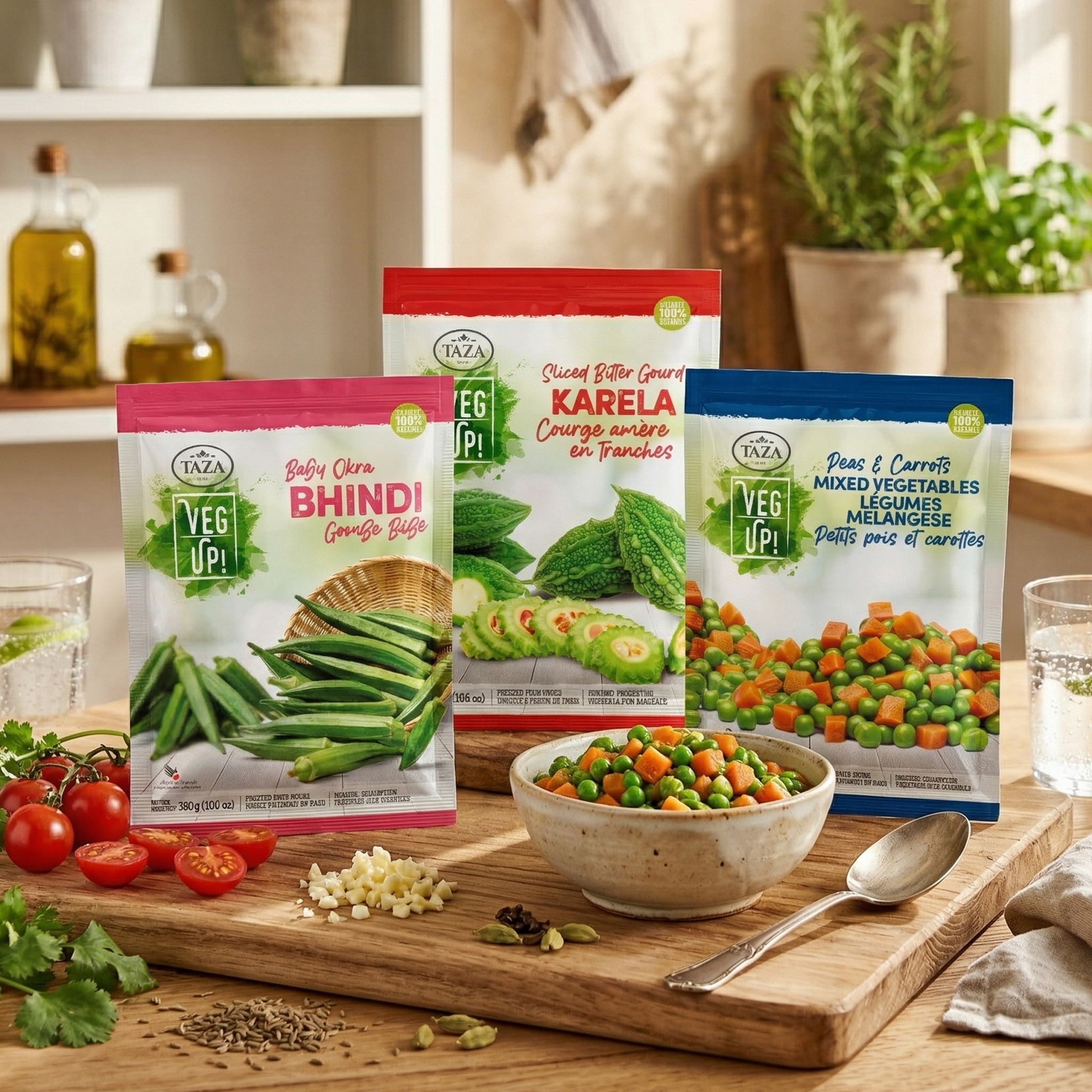
Busy households across the US face this reality every day. A well-stocked freezer can change that completely. Taza Foods frozen vegetables are designed to fit into real weeknight cooking. Pull them out of the freezer and start cooking. By the time you would normally finish prepping vegetables, dinner is already underway.
In this blog, we will look at five high-protein South Asian meal recipes that pair perfectly with Taza Foods frozen vegetables. These are practical, satisfying dishes that help you get dinner on the table faster, without sacrificing taste or tradition.
1.Pigeon Peas (Matar) Khichdi
Khichdi is the original one-pot comfort meal of the subcontinent. It is warm, filling, and deceptively nutritious. Most people think of it as a simple rice and dal dish, and it is. But when you add pigeon peas, you get a serious protein upgrade.
Pigeon peas are high in fibre, folate, and iron, making them one of the most nutrient-dense legumes you can cook with. Combine them with basmati rice in a pressure cooker, season with turmeric, cumin, and a simple tadka of ghee and dried red chilli, and you have a complete meal with solid plant-based protein in under 30 minutes.
TAZA Pigeon Peas take the prep entirely out of the equation. No soaking. No sorting. They go straight from the freezer into your pot. Add TAZA Mixed Vegetables if you want extra texture and colour, and you have a vegetable khichdi that holds its own as a full dinner.
2. Mixed Vegetable Dal
Dal is not just one dish. It is a category. Across Pakistani and Indian kitchens, dal takes dozens of forms. But the one element that makes dal genuinely satisfying on a weeknight is adding vegetables directly into the pot while it cooks.
The idea is simple. Cook your lentils, whether masoor, moong, or chana, until soft. Then stir in TAZA Mixed Vegetables and let everything come together in the same spiced base. The lentils provide most of the protein, while the vegetables add texture, flavour, and extra nutrients.
TAZA Mixed Vegetables are a smart pantry staple for exactly this type of cooking. The blend is versatile enough to work across multiple dal recipes, which means you can cook differently every week without restocking constantly.
3. Guar Sabzi With Lentils
Guar, or cluster beans, is one of the more underappreciated vegetables in South Asian cooking. It has a slightly bitter, earthy flavour that pairs beautifully with strong spice combinations. In Pakistani and North Indian cooking, guar sabzi is traditionally made dry-style, cooked down with tomatoes, onions, and a full masala until the beans become tender and coated in the spices.
What makes guar stand out nutritionally is its fibre and protein content. When you pair it with a base of cooked chana dal or moong dal, you create a sabzi that functions more like a complete meal than a side dish.
The challenge with guar has always been the prep. Fresh cluster beans need to be topped, tailed, and strung before cooking, which takes time most weeknight cooks simply do not have. TAZA Guar comes ready to cook, which means you skip all of that and go straight to the tempering.
4. Peas and Carrots Pulao
A good vegetable pulao is one of those meals that feels festive without requiring much effort.
Peas and carrots are a classic pulao combination because they work together in terms of texture and flavour. The sweetness of the carrots balances the starchiness of the peas. Both hold up well to the heat of the pan without turning mushy, as long as you add them at the right point in the cooking process.
TAZA Peas and Carrots simplify the prep entirely. No peeling, no dicing. Add them directly to your seasoned rice and you get consistent results every time.
To make this meal higher in protein, add cooked chickpeas, extra green peas, or paneer cubes while the pulao cooks. Serve it alongside dal or yogurt for an additional protein boost. The result is a colourful, satisfying meal that works just as well for busy weeknights as it does for family gatherings and special occasions.
5. Bhindi Masala With Chickpea Base
Okra, or bhindi, divides households in a way that few vegetables manage to. People either love it or they strongly avoid it. But done right, specifically cooked dry over high heat with the correct spices, bhindi masala is one of the most satisfying sabzis in the repertoire.
To make this meal high in protein without meat, build a base of cooked chickpeas or black-eyed peas before adding the cooked okra. Season both elements with the same spice blend so the flavours carry through the dish. Cumin, coriander, amchur, and a touch of red chilli powder work particularly well.
TAZA Sliced Okra comes pre-sliced and ready to cook. This is a significant time saver because cutting okra cleanly without it becoming sticky is one of the more tedious prep jobs in the kitchen. Frozen sliced okra also tends to cook more evenly because the pieces are uniform in size.
Are Frozen Vegetables Actually Nutritious Enough for Everyday South Asian Cooking?
Freezing vegetables does not destroy their nutrition. In fact, most commercially frozen vegetables are processed and frozen within hours of harvest, which means they often retain more nutrients than fresh produce that has spent days in transit and on a shelf.
Year-Round Access to the Vegetables You Actually Need
For South Asian cooking specifically, this matters more than it might for other cuisines. Many of the vegetables we cook with, guar, pigeon peas, karela, are not available year-round at every grocery store across the US. Freezing solves the seasonality problem. You get consistent access to the vegetables your recipes actually need, regardless of what season it is or which city you live in.
Why Taza Foods Is Built for This Type of Cooking
Taza Foods built their frozen vegetable line for exactly this type of household. Our products are not an afterthought. They are designed to slot into the real cooking patterns of South Asian families living in the US, where convenience and authenticity are not two separate goals but the same one.
Where Can I Find Taza Foods Frozen Vegetables in the US?
Taza Foods frozen vegetables are available at South Asian grocery stores in the United States. Whether you are in a major metro area or a smaller city with a South Asian community, these stores are your best bet for finding the full product range.
Look for Taza Foods in the frozen aisle. Most South Asian grocery stores stock a dedicated frozen section with vegetables, parathas, and ready-to-cook items. That is where you will find Taza products, including pigeon peas, mixed vegetables, guar, peas and carrots, and sliced okra.
Frozen vegetables have a long shelf life, which means you can keep multiple bags on hand without worrying about spoilage. Having a few Taza products in your freezer means you are always a few minutes away from a proper South Asian meal, no matter how busy the week gets.
FAQs
Are Taza Foods frozen vegetables washed and cleaned before freezing?
Yes. Taza Foods vegetables are cleaned and processed before freezing, so you do not need to wash or prep them before cooking. They go straight from the freezer into the pot.
Can I use Taza frozen vegetables in an air fryer?
Yes. Vegetables like sliced okra and mixed vegetables work well in an air fryer. Toss them in a little oil and your preferred spices, then air fry at 375°F until crispy. No thawing needed.
How long do Taza Foods frozen vegetables last in the freezer?
Most frozen vegetables stay good for 12 to 18 months when stored properly. Keep them sealed in their original packaging and make sure your freezer stays at 0°F or below.
Do I need to thaw Taza frozen vegetables before cooking?
No. Cook them straight from frozen. Thawing first can make vegetables watery and affect the texture of your dish, especially for dry sabzis and stir-fries.
Can I add Taza frozen vegetables to slow cooker meals?
Yes. Add them in the last 30 to 45 minutes of cooking so they do not turn soft. For firmer vegetables like guar or okra, adding them late in the cooking process gives the best results.